
 Posted by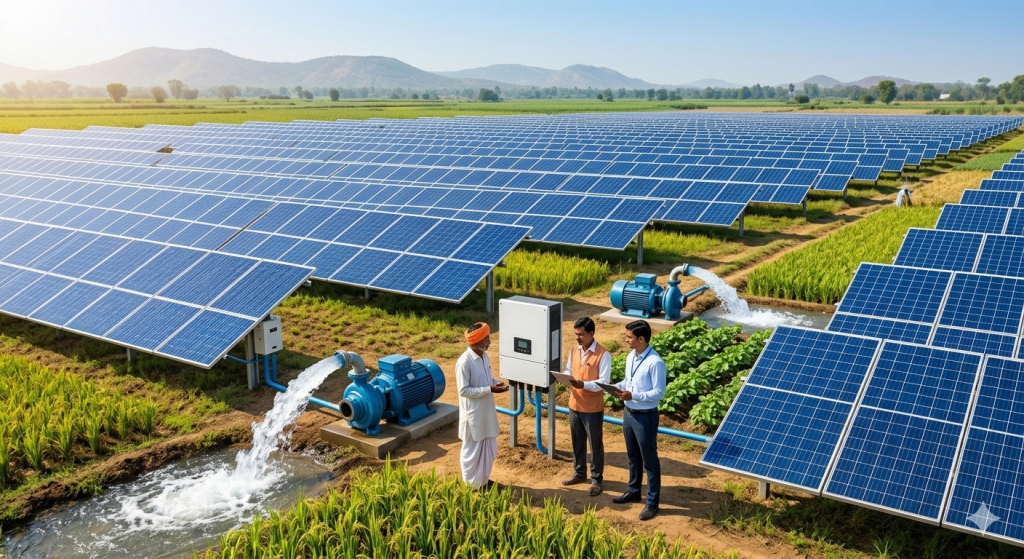
Indian states spend around ₹2.4 trillion subsidizing power for farmers and other consumers. One of the primary uses of such subsidizing is for the operation of irrigation pumps. Low payments cause discom losses and strain state budgets.
To ease budget pressure, the Indian government is encouraging top solar players and households to install solar plants through programs such as PM-KUSUM and PM Surya Ghar.
The idea behind this policy is clear: instead of providing power generated in centralized plants at reduced tariffs, solar players will generate and supply solar energy, creating economic benefits for both citizens and the government, as it requires less public funding to subsidize.
What Are PM-KUSUM and Surya Ghar?
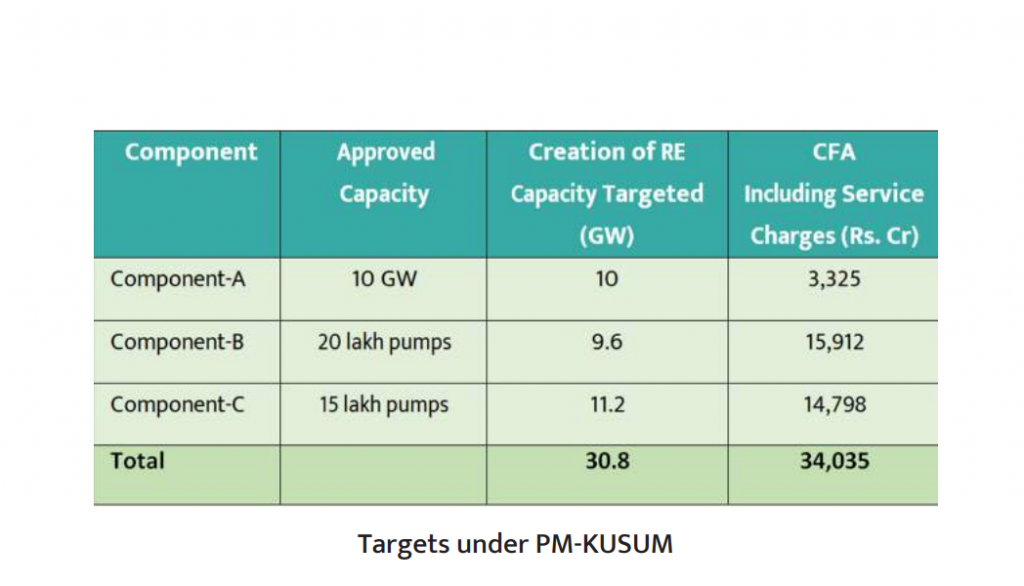
The PM-KUSUM scheme aims to generate 34,800 MW of solar energy by March 2026. The government is investing ₹34,422 crore in this scheme
It includes three components:
- Establishment of small-scale solar power plants in villages.
- Providing solar pumps to farmers.
- Grid connectivity of solar pumps.
Therefore, farmers can either sell excess electricity to the grid or use solar-powered pumps instead of diesel pumps, thereby saving costs and reducing subsidy waste.
The PM Surya Ghar (Muft Bijli Yojana) scheme applies to residential consumers. It includes installing solar panels on 1 crore rooftops.
- Its budget has been raised to ₹22,000 crore.
- Individuals will be provided a subsidy of up to ₹78,000
- ₹30,000 per kW for the first 2 kW capacity and then decreasing amounts after that
Each household can expect around 300 units of free electricity each month. By early 2026, around 24 lakh households will have installed solar panels, achieving roughly 24% of the target.
How Solar Players Are Leading The Energy Ecosystem
Solar companies, such as EPCs, are influenced by governmental solar policies. They cover all the stages: design, procurement, installation, and maintenance. The whole process is referred to as EPC (Engineering, Procurement, and Construction).
India will expand its solar capacity by more than 50 gigawatts in 2026, making it the second-largest solar market globally.
From June 2026, the government will mandate local solar cell manufacturing, making domestic players more competitive than imports. Their primary sources of income include: construction projects, maintenance payments, and electricity sales.
- EPC Business Booms with Solar Players
Solar EPC business is expanding rapidly due to government schemes. The enterprises design, supply, and install whole solar systems, including solar equipment, at a fixed cost. Solar EPC companies earn revenue through mass production and government grants.
The components of the PM-KUSUM scheme, A and C, are helping create large-scale solar plants and solar-powered irrigation pumps in rural areas.
While Surya Ghar is encouraging the installation of rooftop solar systems for residential households. Demand has increased significantly, with around 23.96 lakh residences installing solar systems under Surya Ghar.
These systems require solar modules, inverters, and wiring, providing substantial opportunities for EPCs.
Moreover, the reduction in solar panel costs and the financial benefits of manufacturing solar systems locally are increasing profitability. Thus, solar systems have become cheaper, enabling people to pay back their investment in 4-6 years.
- Cracking Solar Subsidy Business
Solar companies help individuals secure government subsidies to facilitate solar panel installation. Both federal and state governments provide support that amounts to roughly 30-78 percent of the cost of solar panels.
Solar companies partner with DISCOMs and government portals to manage the entire installation process.
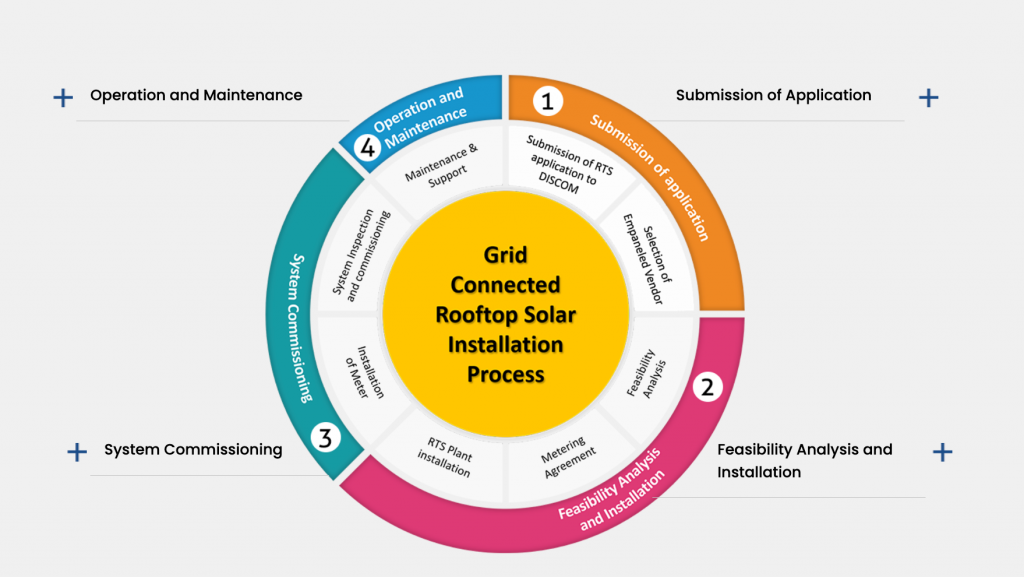
The business models of many solar players are expanding rapidly through aggregation strategies. Companies handle applications and installations for multiple clients simultaneously.
The income generation strategy is through carrying out several installations within a limited time frame. The more installations companies complete, the more subsidies they receive. Some firms even extend financing services at reduced interest rates, using eco-friendly financing options.
- Solar Asset Monetization Strategies
Solar asset monetization strategies generate profits after companies build solar plants rather than just installing them.
In projects like PM-KUSUM, big solar plants have assured payments (PPA revenues), while rooftop plants can even supply excess power back to the grid.
Monetizing through finances involves the following approaches:
- Securitization of assets, in which they are converted into bonds that are then sold to financial institutions.
- Creation of INVITs through which solar projects are bundled for earnings.
According to reports, India expects its solar capacity to double to approximately 150 GW by 2026.
AI-Powered Solar Efficiency For Solar Players
AI-powered solar is helping the solar industry work more effectively. AI technology could monitor solar panels and detect potential faults, a concept known as predictive maintenance.
AI chatbots interact with customers visiting subsidy portals, respond to their inquiries, and identify potential clients, thereby automating sales operations and helping many renowned solar players in the market.
Since India is expected to add 50 GW of solar power in 2026, the use of AI technology is increasingly essential amid rapid expansion.
AI Co-workers That Engage Customers on Subsidy
Vaayu Shop uses intelligent AI agents to communicate with consumers. The AI agents respond instantly to consumer queries regarding solar subsidies such as PM-KUSUM or Surya Ghar in natural language.
- Help consumers complete the entire process in sequence without requiring any human intervention.
- The platform offers basic calculators for profit or savings to build consumer trust and speed up their decision-making.
Such AI technology can be highly beneficial for solar organizations. Whenever a new subsidy scheme is launched, numerous queries are raised simultaneously. Therefore, AI technology enables companies to serve multiple customers, reducing time and costs.
By April 2026, as more consumers adopt solar equipment, these platforms can reach them more conveniently.
The Role of Solar Players: Government Solar Schemes 2026
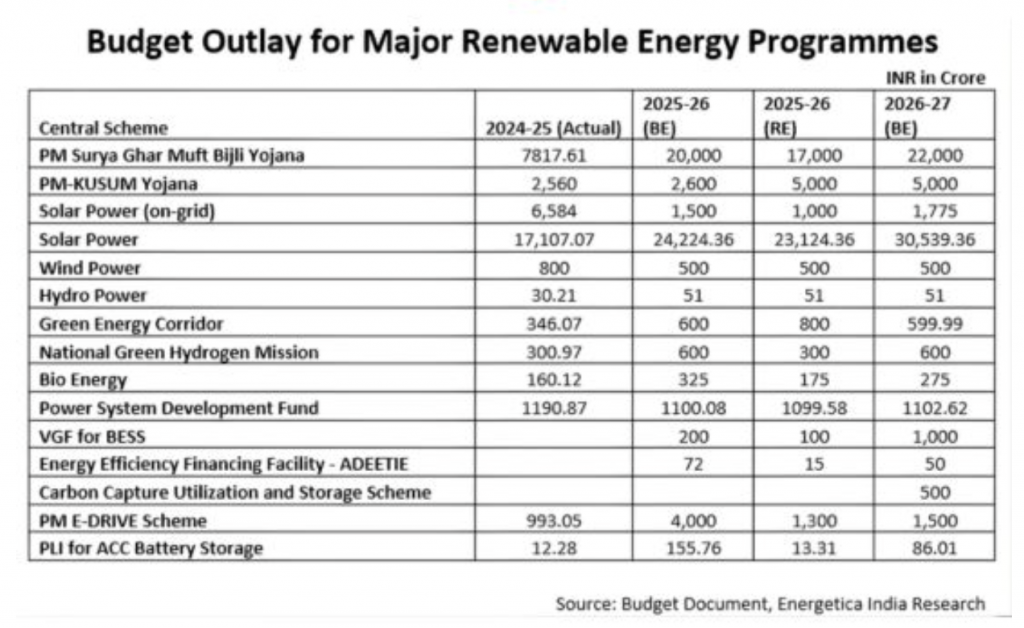
The Government solar schemes are allocating more funds for energy programs by April 2026, with the PM-KUSUM program receiving Rs. 5,000 crore and the Surya Ghar Yojana receiving Rs. 22,000 crore.
The Ministry of New and Renewable Energy claims that India has achieved 150 GW of solar energy capacity. It is mainly due to programs like KUSUM and rooftop solar.
According to BloombergNEF, India is developing into the second-biggest solar energy market globally. Although large-scale solar installations continue to drive the growth, government subsidies have significantly contributed to the development of smaller rooftop systems.
Conclusion
Additionally, emerging technology is playing a significant role. Industry reports highlight the use of artificial intelligence to inspect solar panels with drones and to track subsidies using blockchain technology.
India aims to increase its clean energy capacity to 500 GW by 2030, according to PwC estimates. India will need to invest about $223 billion to meet this goal. As subsidies scale and technology evolves, solar players are set to turn policy momentum into long-term, sustainable profits while powering India’s clean energy future.